
Understanding Minimum Pressure Valves (MPV) in Screw Air Compressors
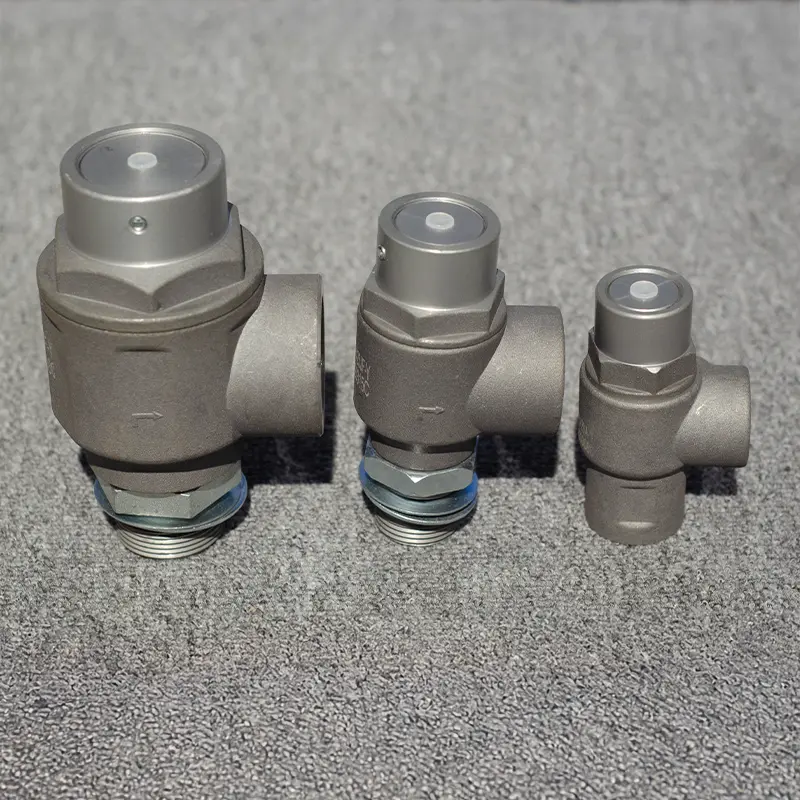
In the world of screw air compressors, every component plays a crucial role in ensuring the system operates efficiently, reliably, and safely. One such essential component is the Minimum Pressure Valve (MPV). The MPV helps regulate and maintain the correct pressure levels within the compressor system, protecting vital parts like the airend, and ensuring smooth operation. In this blog, we’ll take an in-depth look at the function of minimum pressure valves, their importance, and discuss some commonly used models like the MPV-20JFM-Y, MPV-25JFM-Y, MPV-32JFM-Y, MPVJ-50T-Y, and MPVJ-65T-Y.
What is a Minimum Pressure Valve (MPV)?
A Minimum Pressure Valve (MPV) is a type of pressure-regulating valve specifically designed to maintain a minimum pressure within a compressor system. Its primary function is to prevent the compressor from operating under too low a pressure, which could lead to significant damage to the compressor and its components.
In screw air compressors, maintaining adequate pressure within the system is vital for the lubrication of the compressor’s internal components (such as the rotors). Without sufficient pressure, the lubrication system could fail, resulting in increased wear and tear, reduced efficiency, and potential mechanical failure.
The MPV also ensures that the compressor operates within its designed pressure range. When the system’s internal pressure falls below the set threshold, the MPV opens to allow the necessary pressure to build up, providing essential protection.
Why is the Minimum Pressure Valve Important?
- Prevents Oil Starvation: Many screw compressors rely on oil to lubricate their internal components. If the pressure falls below the minimum level, the oil flow could be disrupted, leading to oil starvation. This can cause severe damage to the compressor components over time. The MPV ensures that the system always maintains the correct oil pressure.
- Protects the Compressor from Damage: Operating below the minimum pressure threshold can cause significant wear and tear on the compressor’s parts, such as the bearings and airend. The MPV is crucial for protecting the airend and other sensitive components from damage caused by insufficient pressure.
- Enhances System Efficiency: The MPV maintains a constant pressure within the compressor system, contributing to the efficient operation of the compressor. This results in better energy utilization and consistent performance.
- Improves Reliability: By preventing pressure drops, the MPV helps ensure that the compressor operates reliably over extended periods. It reduces the risk of breakdowns and extends the lifespan of the compressor.
Common Models of Minimum Pressure Valves
There are various MPV models available in the market, each suited to different compressor configurations and applications. Here, we’ll discuss some of the commonly used models, including the MPV-20JFM-Y, MPV-25JFM-Y, MPV-32JFM-Y, MPVJ-50T-Y, and MPVJ-65T-Y.
- MPV-20JFM-Y
The MPV-20JFM-Y is a popular model designed for smaller to medium-sized screw compressors. With a pressure range that is suitable for many compact compressor systems, it provides excellent protection against low-pressure conditions. Its compact size makes it ideal for applications with limited space, and it is highly durable under regular operational conditions.
Key Features:
- Pressure Range: Suitable for small to medium compressors.
- Material: Made from corrosion-resistant materials for enhanced durability.
- Compact design for easy integration in smaller compressor units.
- MPV-25JFM-Y
The MPV-25JFM-Y is an upgrade from the MPV-20JFM-Y, designed to handle slightly higher pressure thresholds. It is ideal for medium-sized compressors or applications where a higher flow rate is required. This model ensures that compressors with increased output capacity maintain stable internal pressure levels.
Key Features:
- Pressure Range: Suitable for medium-sized compressor units.
- Versatile and reliable, designed for moderate to high-pressure applications.
- Durable construction, capable of withstanding rigorous operational conditions.
- MPV-32JFM-Y
The MPV-32JFM-Y is designed for larger compressor systems with a higher demand for air and pressure. This model is ideal for industrial applications where higher airflow and pressure regulation are critical. The MPV-32JFM-Y helps maintain a consistent pressure level, even in systems that handle heavy-duty operations.
Key Features:
- High pressure capacity for industrial-grade compressors.
- Enhanced flow rate to support larger compressors.
- Superior durability for extended operational life.
- MPVJ-50T-Y
The MPVJ-50T-Y is built for larger and more powerful screw compressors. It is engineered to handle the increased pressure and airflow demands of heavy-duty industrial applications. The MPVJ-50T-Y provides precise pressure regulation, helping to protect the compressor system from pressure drops that could lead to costly downtime or repairs.
Key Features:
- High-capacity pressure regulation for large industrial compressors.
- Reliable and robust design for high-demand environments.
- Easy to install and maintain.
- MPVJ-65T-Y
The MPVJ-65T-Y is the largest in this range and is designed for the most demanding air compressor applications. It is used in industries where compressors are running continuously at high pressures and large volumes. The MPVJ-65T-Y ensures that the system always operates within optimal pressure ranges, preventing potential failures caused by low pressure.
Key Features:
- Maximum pressure regulation capacity.
- Suitable for very large, heavy-duty industrial compressors.
- Built for continuous operation under extreme conditions.
Conclusion
Minimum Pressure Valves (MPVs) are an essential component in maintaining the health and efficiency of screw air compressors. Whether you’re using a small, medium, or large compressor system, understanding the importance of MPVs and choosing the right model for your application can greatly extend the life of your equipment, improve its performance, and protect it from costly damage.
Models like the MPV-20JFM-Y, MPV-25JFM-Y, MPV-32JFM-Y, MPVJ-50T-Y, and MPVJ-65T-Y offer a range of solutions to cater to various pressure and airflow requirements. Ensuring that your compressor is fitted with the appropriate MPV is an investment in the long-term reliability and efficiency of your system. Always ensure you select the correct MPV model for your compressor’s specifications and operational needs, and remember that proper maintenance of these valves is key to their continued performance.
By prioritizing the correct pressure regulation, you are not only safeguarding your compressor system but also enhancing its overall performance, efficiency, and operational lifespan
Minimum pressure valve, check valve or combination valve — which one do you have?
These three parts sit close together on the separator tank and are constantly confused when a replacement is ordered. The minimum pressure valve (MPV) holds a minimum pressure inside the oil separator tank so the separator element can do its job and oil can be pushed back to the airend; it opens once tank pressure rises above its set point. A check valve does something different: it stops air and oil flowing back from the discharge line into the tank when the machine stops. On many modern machines both functions are built into one body, and that combined unit is usually called a combination valve (CTV).
Before comparing part numbers, work out which of the three you actually have — a CTV is not interchangeable with a plain MPV even when the port sizes are identical. The minimum pressure valve range and the combination valve range list the port sizes and set points available.
What the set point should be
The set point is chosen by the machine manufacturer and is normally somewhere between 3 and 5 bar (roughly 45–70 psi) on a standard oil-injected screw compressor. It is not something you tune to suit a site:
- Set too low: oil does not separate properly, oil carry-over rises and the separator element saturates long before its service interval.
- Set too high: the machine builds pressure slowly, energy is spent holding the tank above the set point, and the spring and seals wear faster.
Where adjustment is possible it is made with an adjusting screw or by fitting a different spring. On many valves the set point is fixed at the factory, so the only correct action is to order the right variant rather than to modify the one you have.
Symptoms and what to check first
| Symptom | Usual cause | Check first |
|---|---|---|
| Oil in the air line or high oil carry-over | Valve stuck open, so tank pressure never builds | The MPV, then the oil separator element |
| Pressure builds slowly on load | Set point too high, or a partly blocked valve seat | Set point against the machine data, then the valve internals |
| Pressure trapped in the line after shutdown | Faulty check valve or sticking CTV | Whether the machine uses an MPV plus separate check valve, or a CTV |
| Machine unloads and reloads rapidly | Valve oscillating, or a tired unloader on the intake valve | Both valves together — they work as a pair |
| Oil weeping from the valve body or spring cap | Perished seals or a distorted seat | The seal kit as well as the valve body |
Measuring up a replacement
- Port sizes and thread type at inlet and outlet — these decide the match.
- Set point stamped or marked on the body; if it is not marked, quote the machine model and pressure.
- Body style: threaded, flanged, or a CTV with an integral check valve and filter seat.
- Which function it performs — plain minimum pressure valve, or minimum pressure plus check valve.
- Seals and spring, if you are servicing rather than replacing: seats and O-rings are normally sold as a kit.
A photo of the existing valve from two angles plus the machine nameplate is usually enough to identify the correct part. The background on how the valve behaves in service is covered in this guide to MPV function and failure signs.
FAQ
What happens if a minimum pressure valve fails open?
Tank pressure never reaches the set point, so oil separation suffers and oil is carried into the discharge line. The machine may still run and still make air, which is why a valve that has failed open is often only noticed when oil starts appearing downstream or the separator element fails early.
Can a compressor run with the minimum pressure valve removed?
No. The valve is what keeps the separator element working inside its design range. Running without it, or with the internals removed, sends oil through the system and can damage the airend through poor lubrication and oil loss.
How do I know the MPV needs replacing rather than adjusting?
If the set point cannot be adjusted on your valve, replacement is the only option. If it can be adjusted but the pressure will not hold steady afterwards, the seat, spring or seals are worn and a service kit or a new valve is the practical answer.