
Maximizing the Potential of Your ANKA Screw Air Compressor: The Critical Role of Air Filters
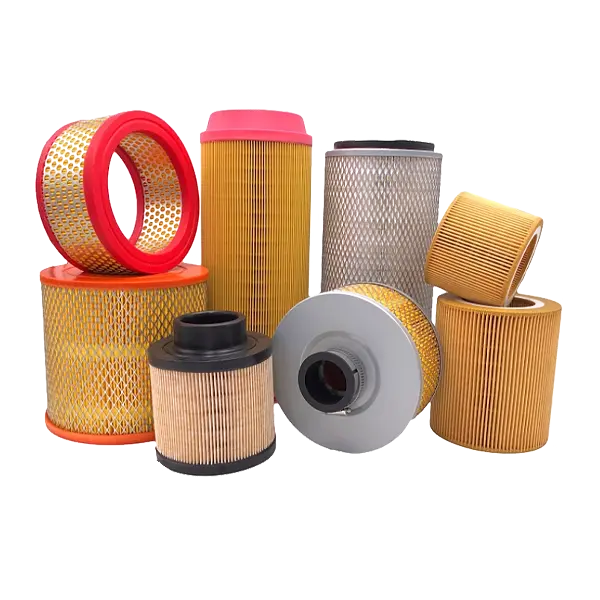
Compressed air systems are the backbone of many industrial processes. Among the myriad of compressors available in the market, the ANKA screw air compressor stands out for its reliability, efficiency, and precision. But even the best systems require impeccable maintenance to consistently deliver peak performance. A cornerstone of this maintenance regimen is the air filter. Understanding and prioritizing the significance of air filters can greatly enhance the longevity and efficacy of your ANKA compressor.
Why Are Air Filters So Crucial?
Think of the air filter as the gatekeeper of your compressor. Just as our respiratory system relies on nose hairs and mucus membranes to filter out particles from the air we breathe, a compressor relies on its air filter to prevent dust, debris, and other contaminants from entering the system.
Unfiltered or poorly filtered air can introduce pollutants into your compressor. These contaminants can wear down the compressor’s internal components, leading to premature failure, reduced efficiency, and increased maintenance costs. More importantly, if the compressed air is being used in applications that require purity—like food processing or pharmaceuticals—then contaminated air can compromise product quality or even pose health risks.
Types of Air Filters for Your ANKA Compressor
There’s no one-size-fits-all when it comes to air filters. Different operating environments and requirements dictate the type of air filter you’d need.
- Particle Filters: Best suited for environments where there’s a significant amount of dust. These filters are adept at trapping solid particles.
- Coalescing Filters: Essential for removing water aerosols and oil. They work by causing small droplets to merge and form larger droplets that can be easily trapped or drained away.
- Activated Carbon Filters: If odor or taste is a concern, especially in the food and beverage industry, these filters are invaluable. They can effectively remove oil vapors and hydrocarbon odors.
While ANKA screw air compressors come equipped with high-quality air filters, understanding the specific needs of your operation can help you choose supplementary or replacement filters that best cater to your requirements.
Maintaining and Replacing Air Filters
The efficacy of an air filter isn’t perpetual. Over time, trapped contaminants will clog the filter, which can restrict airflow and decrease compressor efficiency. Therefore, regular checks and maintenance are essential.
Here are some best practices:
- Visual Inspection: Regularly check the air filter for any visible signs of wear, damage, or clogging.
- Performance Metrics: If you notice a decline in compressor performance or an increase in energy consumption, it could be a sign that the filter needs attention.
- Scheduled Replacements: Even if there’s no noticeable issue, it’s prudent to replace air filters at intervals recommended by the manufacturer or based on the operating conditions.
Remember, using genuine ANKA filters ensures that the specifications match your compressor’s requirements perfectly, maintaining its efficiency and prolonging its lifespan.
A Small Component with a Big Impact
While the air filter might seem like a minor component in the vast machinery of a screw air compressor, its role is paramount. Just as clean fuel is essential for an engine’s optimal performance, clean air is imperative for your ANKA compressor.
In conclusion, investing time in understanding, maintaining, and periodically replacing the air filters of your ANKA screw air compressor isn’t just a maintenance routine—it’s a commitment to quality, efficiency, and longevity. As you strive for operational excellence, let the humble air filter be a reminder that every component, no matter how small, plays a pivotal role in the symphony of seamless operations. Choose wisely, maintain regularly, and reap the benefits of uncompromised compressed air quality.
Compressor air filter: matching the element to the machine
A “compressor air filter” is not one universal part. Elements differ in diameter, height and the size of the inner bore, and a filter that looks similar on the shelf will not seal properly if any of those differ. Three measurements decide it: the outer diameter of the element, its height, and the inner bore where the housing spigot locates. Add the housing style — vertical metal housings or the horizontal plastic case — and whether a safety core sits inside, and you have everything needed to match the part.
| What to check | Why it decides the match |
|---|---|
| Outer diameter and height | The sealing face has to land exactly on the housing shoulder; a few millimetres of difference leaks unfiltered air past the element. |
| Inner bore | Locates the element on the housing spigot; if it is too large the element vibrates and bypasses. |
| Housing type | Vertical and horizontal housings take different element ends and connectors. |
| Safety element | A safety core cannot be cleaned — if one is fitted, order it together with the main element. |
| Machine platform | Confirms the part number; the air filter cross-reference table lists air, oil and separator elements by machine model. |
Signs a compressor air filter is due
- The differential pressure indicator has moved into the change zone.
- Free air delivery has dropped for the same running hours and pressure settings.
- Motor current on the loaded machine has crept up with no other change.
- Dust is visible on the clean side of the housing, or the element is distorted, wet or torn — replace it rather than cleaning it.
Cleaning a paper element with compressed air puts holes in the media that you cannot see. If the element is washable by design, follow the maker’s cleaning method; if it is not, replace it, and never clean a safety core. After any element change, check that the housing and sealing surface are clean and that the clamps or cover are seated before restarting.
FAQ
How often should a compressor air filter be replaced?
Follow the differential pressure indicator or the machine manufacturer’s interval, and shorten it on dusty or humid sites. Running hours alone are a poor guide — two machines on the same schedule can see very different dust loads.
Can I wash a compressor air filter element?
Only if the element is specified as washable. Paper and most synthetic media are not: washing damages the pleats and the glue line even when the element looks intact afterwards.
Does a clogged air filter really cost energy?
Yes. A restricted intake lowers the mass of air the airend can move, so the machine runs longer to deliver the same volume and the pressure drop across the element rises. Both show up on the electricity bill well before they show up as a breakdown.
Do air filter elements change with the pressure rating?
No — and this is where air filters are often over-specified. On a screw compressor the oil filter and the oil-gas separator element are matched to the pressure rating of the machine, but the air filter element is not: the same element covers the 8 bar, 10 bar, 12 bar and 16 bar versions of a given machine. The intake side works at ambient pressure, so the element only has to handle the volume of air the airend moves.
| Service part | Changes with pressure rating? | What it is matched to instead |
|---|---|---|
| Air filter element | No — one element covers 8 to 16 bar | Air volume and machine size: element outer diameter, bore and height |
| Oil filter | Yes | Pressure rating and oil flow |
| Oil-gas separator element | Yes | Pressure rating, oil carry-over target and separator housing |
So when a buyer asks for “the air filter for the 10 bar version”, the useful answer is that the 8 bar machine of the same size takes the same element. Quoting a separate, more expensive element for the higher pressure only adds cost.
Matching an element in three measurements
Two elements can look alike and still not fit. Before cross-referencing, measure the element out of the housing:
| What to measure | How | Common mistake |
|---|---|---|
| Outer diameter | Across the pleats at the widest point | Measuring a crushed or swollen element, which reads 2 to 3 mm out |
| Inner bore | The rubber or metal bore that seals on the housing spigot | Quoting the bore of the spigot instead of the element |
| Overall height | Including the end caps, not the pleat pack alone | Measuring only the pleats, so the cap thickness is lost |
| End style | Open end with a sealing ring, or closed end with a metal cap | Assuming they are interchangeable — they are not |
| Safety element | Whether the housing carries a second, inner element | Supplying only the outer element where the housing expects both |
Part numbers describe the element, not the machine
Numbers such as C14200 or C1250 are element designations: they identify a size family — roughly diameter, height and bore — not a compressor model. Two machines from different makers can share the same element, and one maker can use two different elements across its range. That is why the measurements above matter more than the nameplate when you cross-reference, and why a photo of the old element with a ruler next to it settles most enquiries faster than a model number.
FAQ
Is the air filter on a 10 bar machine different from the 8 bar one?
No. The air filter element does not change with the pressure rating: the 8, 10, 12 and 16 bar versions of the same machine take the same element. Oil filters and oil-gas separator elements do change with pressure.
Can the compressor run without the safety element?
Not for long. The safety element is the second barrier: if the main element tears, it keeps the debris out of the airend. Running without it turns a filter change into an airend repair.
Related parts
See the air filter elements, the oil filters and the oil-gas separator elements we supply, or read how a precision filter fits downstream of the dryer.